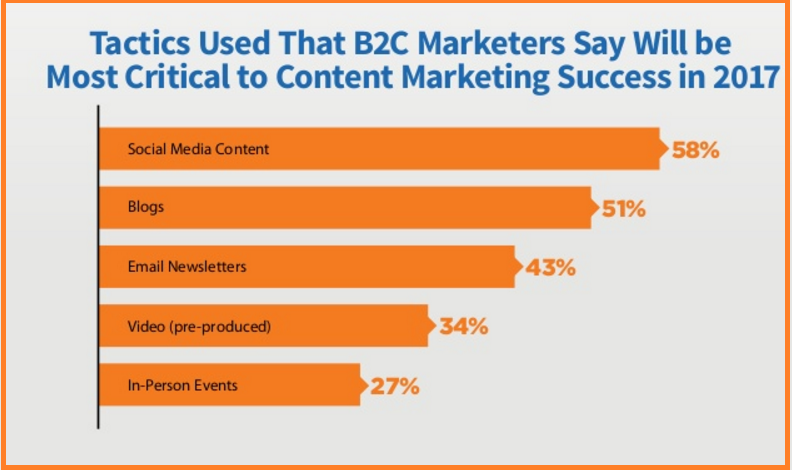
• One of the most important tactics for B2C content marketing is Social Media Content with 85 percent of respondents for CMI survey for North America claiming to have used it. More than 50 percent of respondents are prioritizing Social Media and Blogs as the Content Marketing tactic for 2017 . Brand Awareness, Engagement and lead generation are the top three goals for Content Marketers over the next 12 months.

    b2ctactic

    tactics2017

    goalsb2c

    Techniques that are used by B2C marketers vary from Keyword research and Social Listening to learn about the audience.

    b2ctecniques

    Among the channels that are used by B2C marketers to distribute content, Email and Facebook were quoted as the preferred channel based on the rating by 91 percent and 68 percent of marketers. Social promotion and Search Engine Marketing are the most used methods for promoting content. Among goals quoted by Content Marketers, Awareness is the leading goal quoted by 74 percent and 73 percent use website visits as the core metric with 78 percent stating that they can demonstrate how Content Marketing has helped them achieve results.

    b2cchannels


  • Creating Branded Content, that is most likely to resonate with your audience and increase  site traffic, requires planning the content experience for your target audience. Your holiday season content  seeking to educate, inspire, and convert your audience with a seasonal context, requires a plan. According to Think With Google, shoppers are increasingly searching for products and Gift Guides on YouTube.  Most of the time 70 percent, these videos are watched on mobile.

    With the number of options available,  the search volume for products on Mobile with “Best” products has grown by 50 percent. As high as 43 percent shoppers for Consumer Electronics purchase products on Mobile, while looking at the products in-store. Nearly 70 percent of customers want multiple ways to buy products such as Buy Online and Pick Up in store.

    category1

    Here are Content Marketing examples for targeting the Holiday shopper, that can create  an experience for your brand.

    Gifting

    Gift Guide and  Gift Cards as seen in Whole Foods example where the landing page for Holidays section, “Holiday Headquarters” features a Holiday Gift Guide “30 Days of Gifts”, Recipes and DIY ideas. The landing page shares select  recipes for entertaining and the site gives details on Holiday Gift Cards, Creating a Content experience that is targeted at engaging shoppers with gift ideas and  recipes for occasions.

    wfgift
    (more…)

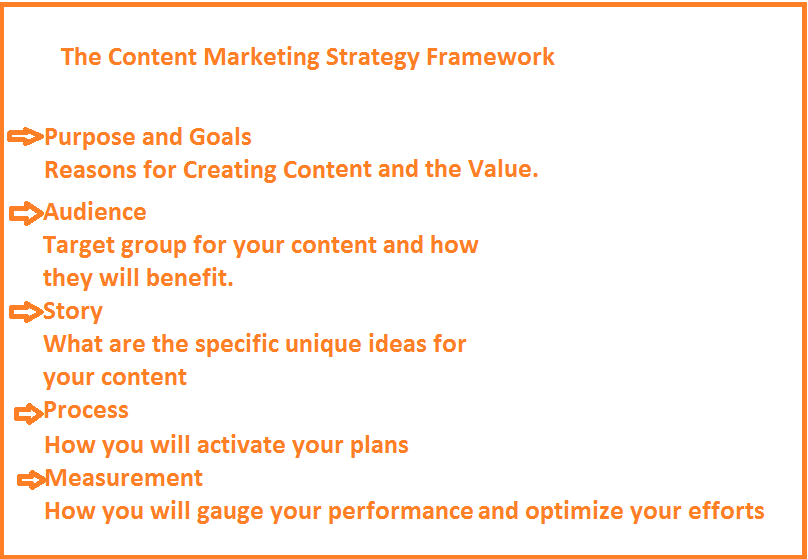
  • Content Marketing Strategy Framework that enables brands build scalable operation and  serve the right content at the right time involves a five-step process. The questions that your Content Marketing Strategy needs to answer are:


    The five steps in Content Marketing Strategy framework are

    Purpose & Goals – Defining the purpose for your content. The question you need to answer is ” How we can create Business value from the creation of an engaged audience”
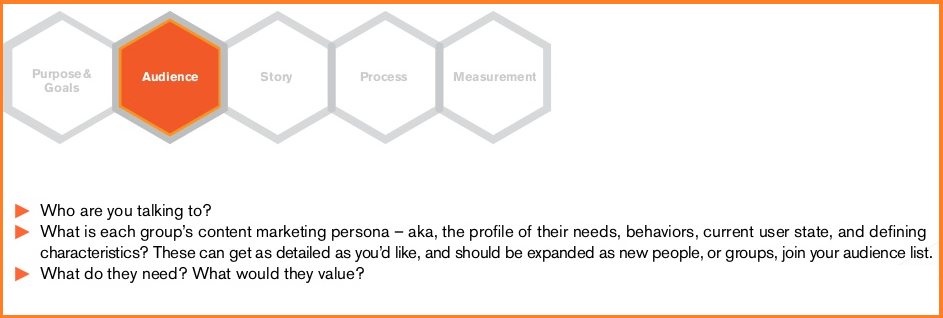
    Audience – Defining the target group for your content and how they derive value from your content
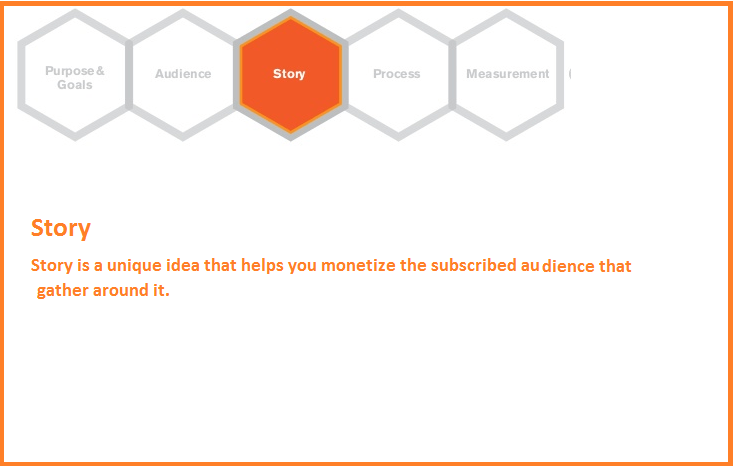
    Story – What are the unique ideas for your content for each stage of the buyer journey
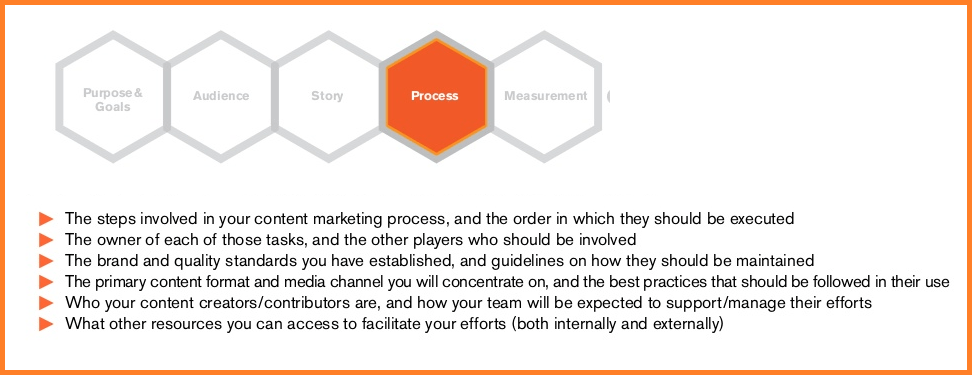
    Process – Process lays down the format for activating your plans
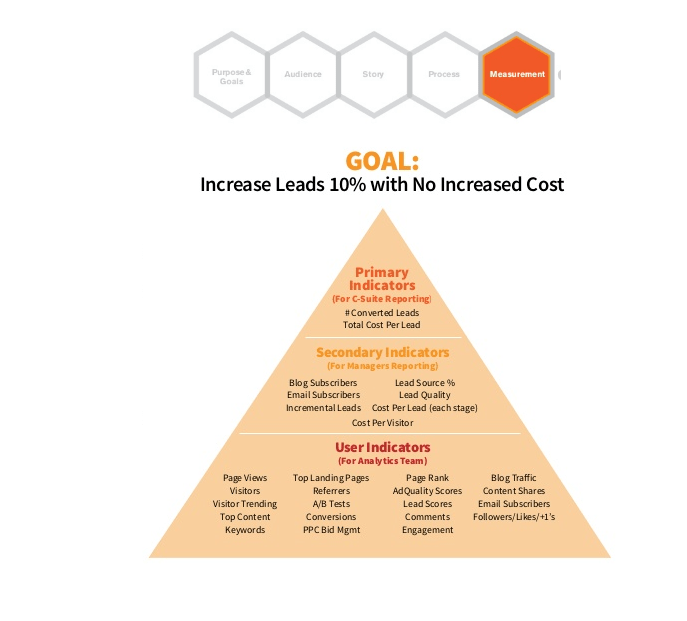
    Measurement – Measurement includes gauging your performance and optimizing your efforts.

    framework

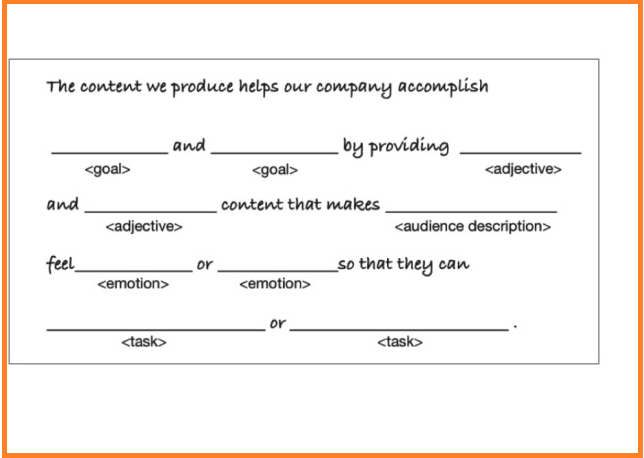
    With the Content Marketing Strategy framework, marketers are able to work out Content Marketing Strategy Statement that is aimed at a cohesive approach for Content Marketing efforts. Here is an easy template to help you work out your Content Marketing strategy statement.
    content-mktg-strategy-statement
    Use the Content Marketing Strategy statement to choose topics and add the same to your editorial checklist.

    Purpose and Goals

    content-purpose

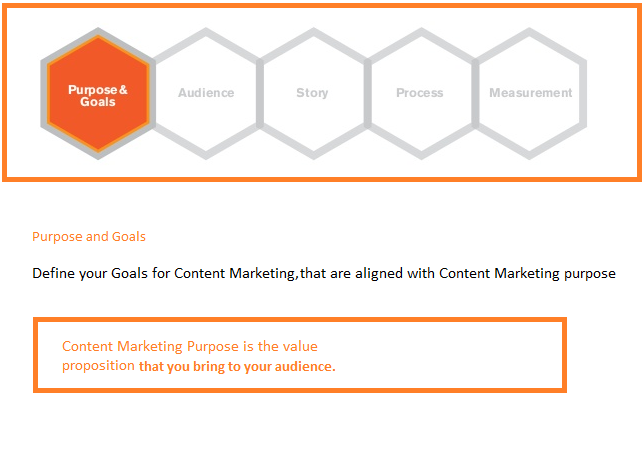
    Purpose and Goals answer the reason for Content Marketing that could range from Increasing revenue to  boosting sales or deepening Customer loyalty to raising awareness. Content Marketing Purpose centers around the value proposition that your content brings with a view to creating value from an engaged audience and answers the question “Why are we creating the content in First place?’

    Audience
    audience

    Define who your audience are and whom you are targeting with your content to turn them into subscribers. Some of the questions that you need to answer to get a clear picture pertain to understanding the needs, behaviors, current user state and any other defining characteristics.

    Story
    story

    The story is a unique idea that lets you monetize audiences that gather around it. The story focuses on Why it happened. A story is a selling tool that is intended to deliver business value. With a story you can deliver unique business value by building customer relationships. With an effective story, brands can build thriving customer communities. At the heart of the story, is Value Creation and purpose. It does not necessarily have a beginning or an end. The story is a way to build a rapport and earn Trust of customers to turn them into loyal fans and supporters.

    Process
    process1

    The Process is an operational plan that will enable your business to meet with Content Marketing requirement. The operational plan lays down the steps involved in publishing content and the order in which they should be executed. The process is a step-by-step plan that spells out the owner of each task for the team involved.

    The Process also covers modus operandi for producing different content format and the best practices that should be followed. The Process also lists stakeholders (Creators/ Contributors and Distributors). The level of support, resources required and timelines form the Process for Content Marketing. It includes Site Navigation, standard routing process and work-flow, required Team and Skill set,  Editorial Style and communication guidelines, Channel Plan and required tools and systems for optimal production and creativity.

    Measurement 
    measurement

    Measurement comprises of Key Performance Indicators and Metrics that help you ascertain your achievement of goals within a timeline. Determine the goals that are required to be achieved to eventually deliver on Key Performance indicators. E.g. if you are required to get to a rich audience database prior to generating qualified leads, you need to measure your performance for the goal of a rich audience database.

  • With the business dynamics changing in a customer-led digital world Forrester’s 2017 predictions require CEO’s and organizations to change their strategic thinking.

    In a bid to get closer to customer, organizations will abandon siloed approach to function with matrix structures that leverage shared functions  to prioritize efficiency and control. The change in structure is taking place on account of two factors

    • Get closer to the customer.

    • Avoid the complexity — and marginal results — of trying to deliver experiences to multiple customer segments across multiple products.

    CMOs will need to follow The Whole Brained approach, using the left and right side of brain, using analytics to deliver personalized contextually rich technology experience, while delivering engaging experiences. The focus will be on skill set that drive digital business transformation, design exceptional personalized experiences, and propel growth.

    CIOs will take the lead position in shaping the Digital strategy of the organization.

    The new leadership places emphasis on three dimensions ;

    • Understanding and personalizing engagement with customers.
    • Running a digital business.
    • Knowing what’s needed to win in a customer-led, digital-centric market.


    CEOs need to know what is needed  to propel their company forward in a customer-led, digital-centric business.

    In 2017, CEOs will continue to strengthen and normalize their leadership teams, and temporal roles created to fill the gaps such as Chief Digital Officer will either fall out of fashion or be calibrated (down) to drive the key digital, data/analytic, and customer programs

    Customers are driving Revenue risk. “Today’s customers reward or punish companies based on a single experience — a single moment in time. This behavior was once a Millennial trademark, but it’s now in play for older generations. It has become normal.”

    To read the full predictions, click here.

Create your own website, free on WordPress.com.Create your own website.
Start free