• Making the story relatable is more than a clever video creative or animation. Pixar delves into various attributes that make the story relatable. The Raison d’être for a story is what determines the success of the film’s story.

    Strong characterizations is one of the factors that lend to the relatability for a story. Encouraging audiences to empathize with characters creates a unique bond. Inspiring emotional understanding brings audiences to delve further on the story and explore the subject matter.

    Brand Storytelling with Content requires Brands to start a conversation with the targeted audience that helps them see the usefulness of the Brand in their lives and thereon engage audiences in an ongoing conversation. Brands that seek to evoke emotions with fans and followers, can use different types of content to tell the Brand Story. Brand Storytelling can be used to engage audiences at different stages of Consumer Journey right from brand discovery to post purchase or advocacy stage.


    Photos, Video Clips and Animated GIF’s

    Visuals are known to be more engaging. To be able to capture the sentiment of your audience with the visuals makes for campaigns that resonate with and engage your audiences.

    Content Fillers For Ongoing Audience Engagement

    Use Content Fillers on Social Media to keep the audience interest alive in your Brand or Campaign by adapting content to be used as a filler to further your brand’s story.

    Target created a  Holiday Adventure Series that led through a maze of presents presenting a number of options that were available for gift shoppers, while building on the story of a magical quest to light up a ridiculously Giant  tree.


    Create Video Content and Contests For Themed Engagement

    Oreo’s Open up with Oreo themed campaign takes forward the campaign idea of openness making the brand relatable in different contexts. The storytelling approach here builds on the idea of inspiring openness and curiosity in every day lives .

    “As a brand that inspires openness and curiosity every day, OREO believes that, if we begin to open ourselves up, we’ll make more meaningful connections and discover that we have more in common than we think, no matter where we live or what walk of life we come from,” said Jennifer Hull, Brand Director Global OREO.


    Oreo has earlier taken the idea of “Wonderfilled Moments” to tell the story with video clips that generate enthusiasm with the audience with an experience #PlayWithOreo that directs users to a link with recipe.

    Use Video Contests to engage users with a theme that establishes your brands’ support for a cause, that can be used to package your brand as a socially responsible brand by supporting a cause or promising benefits that generate positive association for the brand.

    If you are looking at a product centric campaign then a series of simple quizzes or content that is useful can bring forth the product features and help you build your story. Ben & Jerry’s post on Instagram about Flavor Facts created more than average engagement.


    Use Exclusive Product Shots and Visual Treatment

    Product shots that are exclusive create recall for your content. Another interesting way to approach the visual treatment is to see attributes that are closely associated with your brand and use those attributes to create a unique style for your posts.

    Brand Content For New Launches and Offers

    Ben & Jerry’s uses video on Instagram effectively to make the story relatable with links.

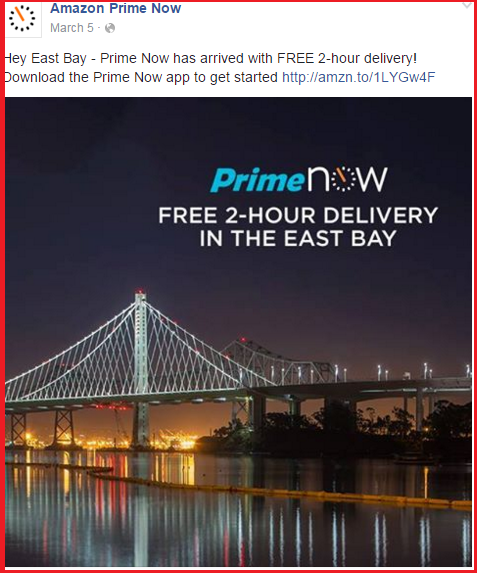
    Amazon’s Prime Now builds on deals and ultra-fast delivery promise with social media posts.
    apn

    Brands that rely on social media referrals can use posts that showcase consumer reviews or user-generated content to endorse the Brand Story. A simple compilation of Users with images in a video format can engage audiences making them feel part of the story while helping you achieve your campaign objective.




  • Honda Civic’s awesome trips Sweepstakes contest “Custom Honda Rides- Awesome Trips”, gives a chance to win a custom Honda Civic Sedan designed and autographed by Demi Lovato or a custom Honda Grom motorcycle designed and autographed by Nick Jonas, or a trip to Europe to meet Nick Jonas.

    honda

    Contests can engage audiences with a theme or with a context increasing the interactions with your brand. In another example Kerastase, a popular Haircare brand encourages audiences to share their curls in a selfie contest, encouraging audience participation.

    kerastase

    Ten Steps For Planning Brand Contest


    Set Your Contest Goals

    Start with defining your goals. Choose a goal that is closest to the metric that  you are trying to achieve results for. Is your goal Brand Awareness, Brand affinity, Conversions, Increased Web Traffic, Obtaining User Data or Increased Reach and Frequency or Impressions.

    ContestTypes
    Pick a Contest Design

    Pick the Contest Design that works for your Campaign goals based on the key metric.

    Determine the reason you are running the contest. Is it for a new product that you would like to build awareness for or are you looking at engaging audiences, introducing a limited time offer or would like to build affinity for your brand with an existing campaign.


    Decide Your Calls To Action

    Select Your Calls To Action. Define what would you like the user to do after interacting with your post. McDonald’s has introduced the contest with messaging centered around  a Special price Combo and launch of new “Strawberry Lemonade”.


    Define Contest Targeting

    Define your Target Audience. Who are the key audiences for your Contest. Depending on your goal you can define your Target.

    Decide on Contest Messaging

    Decide on your contests’ key message or Takeaways for the consumer, this will flow from the campaign rationale. If the campaign rationale requires that your consumers think about your brand in a certain way, the key messaging in your contest should be designed to deliver the message.

    Articulate the keywords For Discovery

    Articulate the keywords and Hashtags that are mandatory for your campaign discovery. Build the same in your messaging.

    Choose Contest Tactics and Channels

    Choose the right tactics for your contest, the tactics depend on your budget your brand  and contest design. If you plan to go with a contest that requires User Generated data the a suitable tactic for your brand will require to create a buzz for your campaign. This could mean engaging a social media celebrity, co-brandng or any buzzworthy posts that can make your contest go viral.

    Choose the channels that you would use to promote your contest and  the channels where you would host your contest. Include the Terms and Conditions link and host the link on your brand’s site or micro site. Depending on the channel determine the key communication elements such as “Facebook Video post” and “Twitter Post”. Decide on Organic Social Media and Paid Social Media elements. Choose the right creative sequence for maximum impact. Create a flow chart of messaging for different use case scenarios.

    Decide Your Contest Budget

    Your contest budget will cover for the contest design cost, cost for promotion and distribution on social media, depending on tactics and paid media as well as any creative and web development contest. If you are using a software vendor, you have to build in the cost for the same.

    Measure With Metrics

    Determine the metrics that you are trying to achieve growth for include the key metrics in order of priority i.e. conversions, visits, Engagement, Interactions. If you are introducing a price off, build in the metrics for the new price or new launches.


    Collaborate and Roll

    Bring in all stakeholders up to speed with the contest details, agree on all the Terms and conditions and Brand guidelines , define the critical success factors and the barriers to success and how to overcome the same.


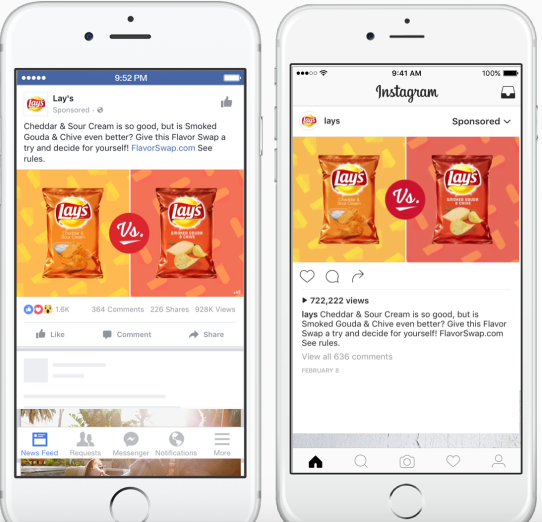
  • Flavor Swap campaign for Lay’s on Instagram, yielded results for Frito-Lay North America by increasing the reach for the campaign, lowering the cost and increasing the sales. The interactive campaign on Instagram brought about an increase in in-store sales. The use of Instagram in its campaign increased the reach for the advertiser by 5 percent, lowered its CPM by 3 percent and drove a 5 percent sales lift compared to when it ran a campaign on Facebook only.

    “Running our Flavor Swap campaign across Instagram and Facebook and Instagram proved a powerful punch in our ability to build awareness on mobile for new chip flavors and ultimately drive sales,” says Atin Kulkarni, Senior Director, Portfolio Strategy, Frito-Lay North America.

    screen-shot-2016-10-08-at-9-39-21-am

    Instagram is popular for Online campaigns, according to an Instagram blog post, for nearly 700 campaigns, 98 percent generated significant lifts in ad recall—2.8X higher than Nielsen norms. And 70 percent of performance campaigns generated statistically significant lifts for online conversions or mobile app installs. Instagram is also known to produce results in the offline world, with increase in In-store sales and Household penetration, according to a study by Datalogix.

    The interactive campaign run by Frito-Lay let the users decide which flavors to go for in comparison with the existing flavors. Building an Interactive content format engaged users on the go. To design interactive content for your brand, here are some important tips:

    Keep your Text brief and bite sized
    Build the experience for storytelling, to increase the audience participation.
    Tailor the copy for your audience.
    Brand Voice and Personality should be central to your posts.
    Make your content unique and stylized, for users to pay attention to your posts.
  • According to the NRF (National Retail Federation), Retail non-store sales are likely to grow by 10 percent, while Deloitte has projected a growth of 19 percent for the holiday season. According to Internet Retailer, “Non-store sales are expected to increase 7-10 percent year over year to as much as USD 117 billion for the 2016 holiday season of November and December, the National Retail Federation said Tuesday. Non-store sales are those made mostly online but include sales via phone and catalog. Online holiday sales increased 9 percent during the 2015 holiday season, beating the NRF’s 6-8 percent projection.”

    Deloitte’s Retail and Distribution practice expects total holiday sales to exceed USD 1 trillion, representing a 3.6 to 4 percent increase in November through January holiday sales (excluding motor vehicles and gasoline) over last year’s shopping season. Additionally, Deloitte forecasts a 17 to 19 percent increase in e-commerce sales, reaching USD 96 to USD 98 billion during the 2016 holiday season.

    In addition to online sales growth of 17-19 percent, as projected by Deloitte, making the e-commerce sales reach USD 96-98 Billion, digital interactions—meaning the use of desktop, laptops, tablets and smartphones—will influence 67 percent, or USD 661 billion, of retail store sales this holiday season.

    Digital influence includes, for example, shoppers researching products before buying them in stores, consumers ordering online and picking up merchandise in a store or a store associate placing an online order for an out-of-stock item and shipping it to a customer’s home.

    According to Rod Sides, vice chairman, Deloitte LLP and retail and distribution sector leader, “Retail competition won’t come from the big box down the street or major e-commerce players,” Sides noted. “It’s likely to be the small and midsized retailers that focus on niche products and experiences. This group has been collectively stealing share from large, traditional retailers to the tune of $200 billion in annual sales over the last five years. The retailers that compete on differentiated products and experiences should be better positioned to outperform those who try to compete on low-price, value and convenience, or continue to rely on conventional sales events and promotions.”

    “The trend to watch is the way that online, mobile and store channels influence each other,” says Rod Sides. “Large e-commerce players and digital platforms such as Facebook and Pinterest are shaping what people think a great shopping experience is—a fast, highly-curated assortment with access to visuals, information and buying sources. Since these bigger platforms are more connected to the customer than the tradition retailer, it is important that they are part of retailers’ digital marketing campaigns this holiday season,” he says.

Create your own website, free on WordPress.com.Create your own website.
Start free